
Still breastfeeding your toddler? Here's why that's not "still" at all
Still nursing past one, two or three? A Dubai IBCLC on what the WHO actually recommends, why the one-year cut-off is cultural not clinical, and the psychology of why it's working for you both, and why it doesn't matter what anyone else thinks.
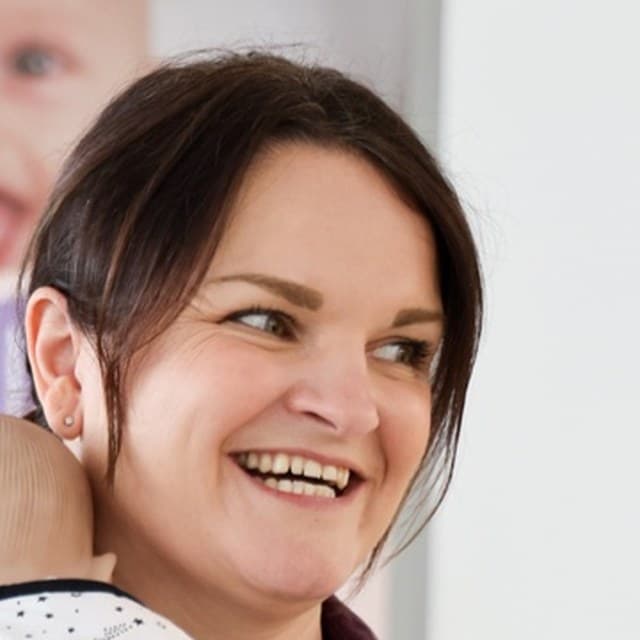

Still breastfeeding your toddler? Here's why that's not "still" at all
Someone will ask you this soon, if they haven't already. It'll come from a well-meaning aunt at a birthday party, or a stranger in the Waitrose queue who's clocked your two year old tugging at your top, or (worse, somehow) another mum at pickup who stopped at twelve months and has internally decided that's the correct number. "You're still breastfeeding?" Still feels almost ‘criminal’ and accusatory in that sentence. Like you've overstayed a booking. Like there was a checkout time you missed and nobody told you.
I want to start here, before the biology and the psychology and the bit where I get to say "the WHO agrees with me" in a tone that is just a little bit smug, because the discomfort you feel every time someone asks that question isn't yours to feel. It was never yours. It's theirs, dressed up as concern and handed to you at the school gate.
The number nobody puts on the tin
Here's the bit that surprises most of the mums I sit with in clinic — the ones who've been nursing a two, three, four year old and bracing for judgement every time it comes up. The World Health Organization doesn't recommend breastfeeding until one. It recommends exclusive breastfeedingGlossaryExclusive breastfeeding means giving a baby only breastmilk — whether fed directly at the breast or expressed — with no other food, drink, or liquid during the first six months of life. The WHO defines it as "only breast milk with no add…Read the full definition → for the first six months, and then continued breastfeeding, alongside food, up to two years of age or beyond. Beyond. Not "up to." Or beyond. There's no upper limit written into that guidance at all, because the guidance was never built around an easy to follow calendar. It was made around what a growing immune system and a developing gut actually need, and, in a shock to no one, it turns out neither of those things reads a birthday card.
Somewhere along the way, in a handful of Western countries, "beyond" got edited out of the conversation and swapped for a soft cultural deadline of around a year — coincidentally, right around when maternity leave runs out and the health visitor stops asking about feeding at all. That timeline was never clinical, but it is logistical. It got mistaken for medical advice by a generation of us who had no particular reason to question it.
What your body is still doing, even now
The composition of your milk hasn't frozen in time since your toddler was a newborn, it keeps adjusting to what they need now, not what they needed then. The immune properties don't switch off at some arbitrary month; if anything, they're doing more work once your child is in nursery, picking up every bug going round Dubai in those back-to-school weeks, and needing something extra to fight it off. This is one of the more maddening things nobody explains to you: a feed at eighteen months, or three years, isn't a nostalgic top-up. It's still doing a job, and a necessary one.
The part that's harder to put on a fact sheet
If I'm honest, the immune argument is the easy one — the one you can screenshot and send to your mother-in-law when she raises an eyebrow. The harder, more truthful reason most of the mums I work with are still nursing an older child has very little to do with antibodies and everything to do with what happens to a child’s (and a mothers!) nervous system mid-meltdown, mid-tantrum, mid three a.m. wake-up, in a country that isn't the one either of you were born in and with no one down the street to help you when you need it. Feeding regulates this. Not just blood sugar, the whole nervous system, both of yours, at the same time. For a lot of families out here, an ocean and several time zones away from the grandparents or the aunties or the friends from forever ago who'd normally be absorbing some of this, that's a regulation tool that’s the easiest to use in the middle of the night.
There's a strand of attachment research that gets misquoted constantly, so I want to be careful with it: extended breastfeeding, when it's child-led rather than forced by either of you, is associated with secure attachment, not because breastfeeding itself is magic, but because responding to a child's cues consistently, whatever form that response takes, is what builds security in the first place. The breast, in this case, is just the delivery method for something your toddler would need from you regardless.
The judgement is newer than you think
If you want some perspective for the next time someone gives you a look, most of the world isn't giving you one. Extended breastfeeding past two is unremarkable, expected even, across huge parts of the world, including, often, the very countries many of the nannies and helpers around us in Dubai grew up in. The one-year cut-off is a recent, geographically narrow, culturally specific idea that's been sold to us as as universal common sense. It isn't, it's a preference pretending it’s a must-do.
Where this leaves you
None of this is me telling you to keep going. I'd be doing exactly what I'm annoyed at everyone else for doing if I swapped one deadline for another and told you two, or three, or "until they self-wean" was the correct answer instead. It isn't. There is no correct answer, there's only the one that's true for you and your child at this time, and it's allowed to change its mind.
What I do want you to walk away with is this: if you're still nursing a toddler and something in you has been bracing for that question at every family gathering, you can put the bracing down. You were never overdue, or breastfeeding too long. And when you do decide it's time, because you will, one day, whether that's led by your child or by you, and either reason is a good enough one on its own, that doesn't undo any of this. It's the next chapter, the next stage, not a correction of this one you’re currently in. I'll walk you through exactly how to do that responsively, without cry-it-out, in the next post. And after that, the part almost nobody writes about honestly: what actually happens in you once it's over.
Whether you're nursing a one year old, a three year old, or you're just tired of justifying either, I offer one-to-one lactation support for families at every stage of this, not just the early weeks. Book a free consultation and let's talk about what's actually true for you and your child. No calendar required.
Lisa Adair
Paediatric sleep consultant and Internationally Board Certified Lactation Consultant. Before founding Lullabies, Lisa spent 20+ yrs as a NICU and paediatric nurse with the NHS. She works with families in Dubai and worldwide, by video.


Notes from Lisa,
when they're worth sending.
New essays, what I’m reading, and answers to the questions I’ve heard most this fortnight. No promo, no scarcity, easy unsubscribe.
If this didn’t quite answer it, let’s talk.
A complimentary 15-minute call to tell me what’s going on. I’ll listen, and tell you honestly whether I’m the right person for what’s happening right now.