What actually happens in labour: A midwife and lactation consultant answer the questions you're too embarrassed to ask
What contractions actually feel like, what the staff aren't telling you, and the questions every 34-week pregnant woman is googling at 2 a.m.

What actually happens in labour: A midwife and lactation consultant answer the questions you're too embarrassed to ask
You're lying awake at 2am, 34 weeks pregnant, googling "what does a contraction actually feel like" for the seventeenth time this week.
The problem? Every answer you find is either terrifyingly graphic or so sanitised it's useless. No one's actually telling you the truth. So let's fix that.
I'm Lisa, a certified lactation consultant and sleep coach with over 20 years as a NICU and paediatric nurse. I've partnered with Nikki Oliver (The Fit Midwife) - a UK and UAE registered midwife with over a decade of experience - to create the Birth & Beyond Masterclass here in Dubai. Between us, we've supported hundreds of women through pregnancy, labour, and those chaotic early weeks.
And we're done with the sanitised version. Here are the honest answers to the questions you're too embarrassed to ask - but desperately need answered.
How do I actually know I'm in labour?
This is the number one question we get, and for good reason. Early labour can feel like period cramps, back ache, or just... nothing obvious. You might have a "show" (bloody mucus plug - yes, it's as delightful as it sounds). Your waters might break dramatically like in the movies, or they might not break at all.
Here's what we tell our Birth & Beyond families:
Call your hospital when:
- Contractions are regular (every 5 minutes for an hour)
- You can't talk through them anymore
- Your waters break (even if contractions haven't started)
- You're bleeding (more than spotting)
- You just KNOW something isn't right
That last one matters more than you know. Trust your instinct. This also rings true when baby arrives.
In Dubai labour wards, you'll often be encouraged to come in early "just to check" - which sounds reassuring but can sometimes lead to unnecessary interventions if you're not actually in active labour yet. We talk through these nuances in the course because understanding the Dubai medical system is just as important as understanding your body.
What does a contraction actually feel like?
Everyone describes them differently, but here's our version:
Early contractions feel like strong period cramps. You can breathe through them. You might even ignore them for a while. Active labour contractions are a different beast. They build like a wave - starting low in your back or pelvis, intensifying across your abdomen, peaking, then slowly releasing. At the peak, you can't talk, you can't think about anything else, and you're probably making involuntary noises. Only you and the contractions exist in your world.
And that's completely normal. The good news? They come in waves. You get breaks between them. Your body is designed for this, but that doesn't mean it's not hard.
We teach comfort positions, breathing techniques, and when to use pain relief in Birth & Beyond - not because we think you need to suffer, but because understanding what's happening in your body makes it less scary.
What if I poo during labour?
You probably will. Nearly everyone does. And you know what? Midwives don't care. We've seen it a thousand times. We quietly wipe it away and carry on. Your birth partner probably won't even notice.
If you're pushing effectively, things are going to come out. That's how pushing works.
What happens to the placenta?
After your baby is born, you'll deliver the placenta - usually within 10-30 minutes. In most Dubai hospitals, you'll be given an injection (syntometrine) to speed this up and reduce bleeding risk. It feels like one more contraction, some pressure, and it's out. Much easier than the baby, I promise.
The midwife will check it's complete (missing pieces can cause infection or bleeding), then it's disposed of. Some women choose to keep it for encapsulation or lotus birth, but that's a personal choice you'll need to discuss with your hospital beforehand.
Will I need stitches?
Maybe. Maybe not. If you have a small tear or episiotomy (a surgical cut - less common now), you'll need stitches. The midwife or doctor will do this while you're holding your baby, usually with local anaesthetic.
Does it hurt? Some women feel pressure or tugging. Others feel nothing because of the adrenaline and endorphins. The stitches dissolve on their own over 2-3 weeks.
Healing varies. Some women feel fine after a week. Others need longer. We cover postpartum recovery (the stuff no one warns you about) in detail during Birth & Beyond because the first 48 hours are just as important as labour itself.
What if I need a C-section?
Dubai has high C-section rates - both planned and emergency. Understanding what happens during a C-section, what it feels like (pressure, tugging, but no pain), and how recovery differs from vaginal birth is crucial. We don't shy away from this in Birth & Beyond. In fact, we specifically cover:
- When C-sections become necessary
- What happens in theatre
- How to support breastfeeding after a C-section
- Recovery timelines
- When to ask for help
Because we believe that understanding your least desired outcome is just as important as planning for your ideal birth. When you know what might happen, you can see it with less fear.
What about breastfeeding right after birth?
This is where my lactation consultant brain kicks in. Most hospitals will encourage skin-to-skin immediately after birth (unless there's a medical reason not to). Your baby will probably latch within the first hour or so - or they might just nuzzle and sleep. Both are normal.
Breastfeeding in those first 48 hours is about connection and learning each other, not nutrition. Your baby is born with reserves. Colostrum (the thick, golden first milk) is all they need.
But here's what no one tells you: breastfeeding can be HARD at first. Painful even, if the latch isn't right. Cluster feeding on day 2-3 is exhausting. Your milk coming in on day 3-5 can be overwhelming and even slightly painful.
That's why Birth & Beyond includes practical feeding support - not just theory. And why every participant gets 28 days of WhatsApp support from both me and Nikki after birth. Because the real questions start when you're home with a screaming baby. Because our classes are inspired by UK NCT (but in Dubai) style classes, the aim is that the other parents in the group become your support network too, so you can almost guarantee that 1 of them will be awake feeding at 3am too!
Is it normal to feel scared?
Absolutely.
Birth is one of the most physically and emotionally intense experiences you'll ever have. Fear and or anticipation is completely natural.
But here's the difference between fear and trauma: understanding. When you know what's happening in your body, when you understand your options, when you've practiced comfort techniques, when you trust your care team - fear becomes manageable.
That's why we created Birth & Beyond Dubai prenatal classes. Not to eliminate that fear completely (for most that is impossible), but to replace it with as much confidence as we can.
Why we're telling you all of this
Because knowledge isn't about control. It's about building resilience and understanding what may happen. You can't control how your birth experience unfolds, but you can control how prepared you feel walking (or being wheeled) into it.
Birth & Beyond is a 4-week antenatal course specifically designed for Dubai parents to be. We cover:
- Signs of labour and when to call the hospital
- What actually happens during labour (all scenarios - vaginal, assisted, C-section)
- Pain management options and comfort techniques
- Immediate postpartum realities
- Physical & mental health
- Breastfeeding (realistic expectations, latch techniques, when to ask for help)
- Formula feeding
- Newborn care basics (nappy changes, bathing)
- Baby sleep
- Current baby safety guidance
- Building your support network
But more than content and a resource bag, you'll leave with:
- A village. The other couples in your course become your people - the WhatsApp group that gets you through the 3am panic moments
- Professional support. 28 days of virtual midwife, lactation consultant & paediatric nurse support after birth. Literally in your pocket to ask when you need to.
- Confidence. Not because birth will be "easy," but because you'll understand what's happening
- Continuity of care. A mainstay in UK and many other healthcare systems, we offer this. Midwifery visits, birth support and postnatal/lactation visits in Dubai. Not only does it mean that you know (and are comfortable with) us throughout. It also means that we get to know you, and what's 'normal' for you. We've got your back and know exactly how to advocate for you and with you, should you need us to. Knowledge is a power to be shared.
We deliberately keep our classes small to meet the needs of the parents that join us, and so that you don't just feel like another face in the crowd. Or even worse, an insurance payment number in the Dubai healthcare system.
If you're pregnant in Dubai and want to feel prepared (not petrified), this is for you, our course dates and booking links are available here.
P.S. If you're not sure whether Birth & Beyond prenatal classes are right for you, book a complimentary consultation with me. We can talk through your specific concerns and I'll tell you honestly whether the course will help.
Because the goal isn't to get you to sign up, it's to make sure you feel supported - whatever that looks like for you.
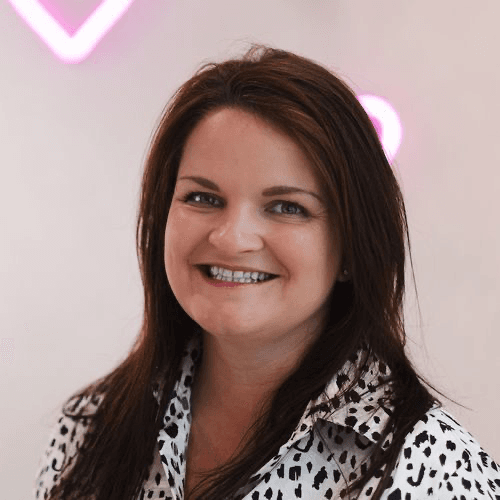
Lisa Adair
Paediatric sleep consultant and Internationally Board Certified Lactation Consultant. Before founding Lullabies, Lisa spent 20+ yrs as a NICU and paediatric nurse with the NHS. She works with families in Dubai and worldwide, by video.


If this didn’t quite answer it, let’s talk.
A complimentary 15-minute call to tell me what’s going on. I’ll listen, and tell you honestly whether I’m the right person for what’s happening right now.