
The KHDA school cut-off age changes: what options do you have?
The KHDA cut-off changes: what options do you have?
The other day, the KHDA / Ministry of Education Instagram stories dropped, and predictably, a lot of parents went into mild (or not-so-mild) panic. On paper, the announcement sounds simple enough: From the 2026–2027 academic year, the school admission age cut-off moves to 31 December instead of 31 August. Which means children born later in the year are now eligible to start school earlier than before. But as with most things in parenting — and especially parenting in Dubai — the reality is a bit more complicated than a neat square graphic on Instagram. So let’s talk about what this actually means, once you step away from the official FAQs and into real family life.
Schools don’t just magically expand overnight
One thing the official posts understandably don’t touch on is the logistical side of this for schools (who have already had to deal with the term dates changing into a more unified structure this year). If suddenly a larger group of children becomes eligible for early years entry, schools don’t just click their fingers and absorb them. They need:
- more classrooms
- more early years teachers
- more assistants
- tighter ratios
- more space
- more resources
And early years staffing is already one of the hardest areas to recruit for properly. So while this change sounds simple, the knock-on effect is that schools may need to reshuffle year groups, add sections, or rethink how they structure Pre-KG, KG and Year 1 classes. That matters — because it directly affects what kind of experience your child is actually going to have day to day.
Age and readiness are not the same thing
This is the bit we all need to think about...Yes, under the new rules, some children will now be eligible to start school at just turned two or newly three. But we all know that eligibility doesn’t magically make a child ready for a school environment. So many outside factors come into play, right down to whether the child is an 'only' child, has older siblings, or is the oldest child in the home. We very clearly know that birth order influences a child's path, not just their age.
In real life, that might mean:
- children who aren’t toilet trained yet
- children who still nap properly during the day
- children who struggle with long group routines
- children who are emotionally very young
Nurseries are set up for this. Schools… often aren’t. And yet, nowhere in the official messaging is there any real discussion about how this plays out for children who are developmentally still very much toddlers (because that's what they are!).
This is where nurseries really matter
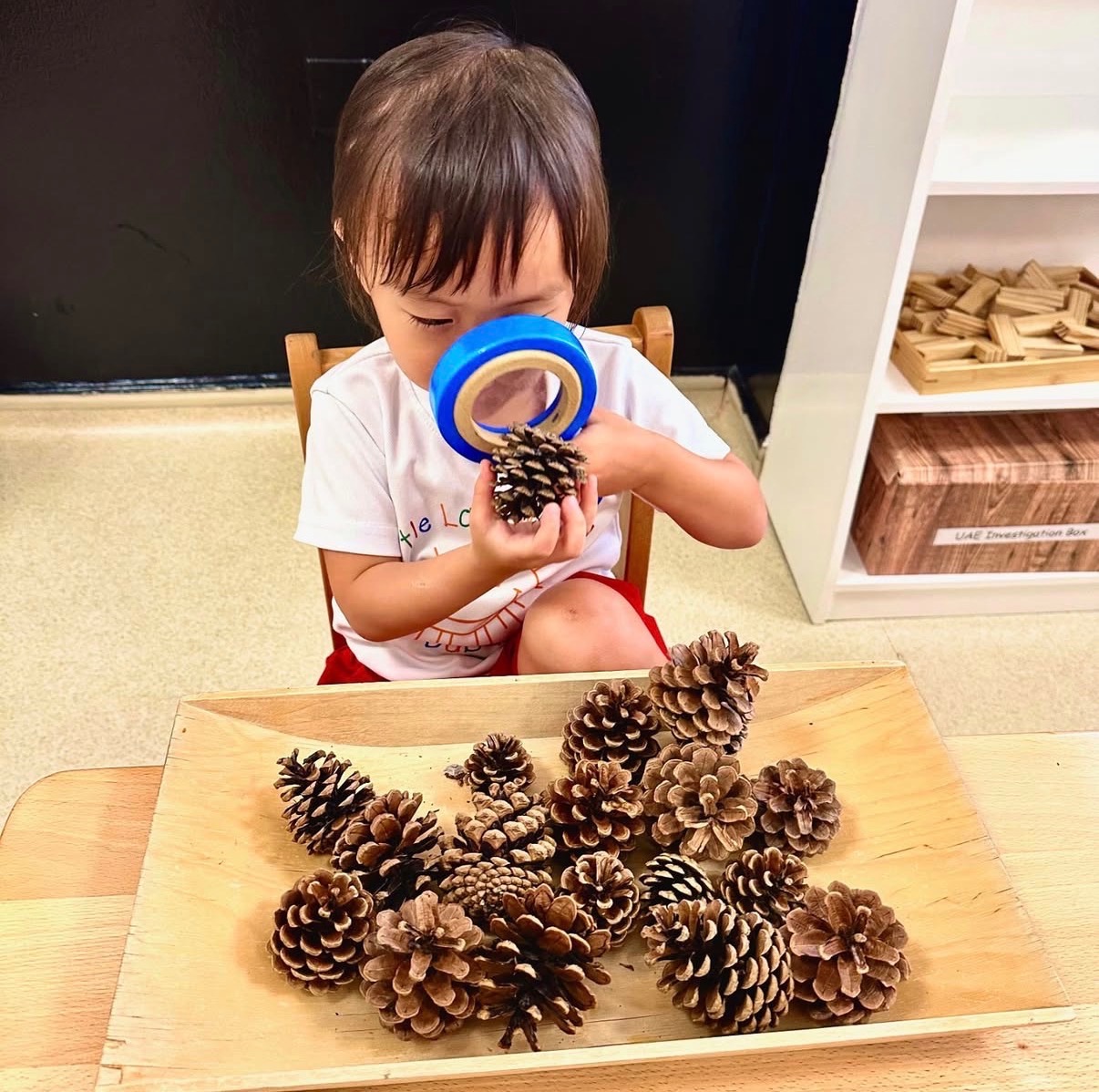
One thing I hope comes out of this whole conversation is a renewed respect for nurseries — because they are not just a “holding pen” until school starts. There are some outstanding nursery environments in Dubai that support children right up to what is effectively FS2 / KG1 / even Year 1 readiness, but in a way that actually makes sense for young children. Many allow 'part time' attendance of x3 days per week right up to and including FS1, really important for the ones who are still taking naps and not quite enjoying structure the way the traditional school setting does it. We want our child to be 'seen', to grow and to learn to be themselves. Nurseries can often do this much better than the school environment, simply by virtue of lower class sizes (in most cases).
Places like:
- Little Land Nursery - take up to and including FS2. They have had the same FS2 teacher for eleven years, which I think speaks volumes. Happy staff, happy children. Our in- person Nanny training courses are run here, as the facilities are excellent. Extremely child led, Montessori Nursery, which very recently won the Setting of the year by Montessori Global. And from what I can see whenever I am there, it's extremely well deserved. The outdoor space is beautiful, and the passion the teachers have is amazing. There's an open door policy with their founder and management team (I've seen it in action), and the ethos of the nursery runs from founder, right down to their support staff with kindness, respect and equality.
- Willow Nursery- take up to and including FS2. This is the only nursery I saw when we moved into the area, and I (quite literally), threw my credit card at them during our visit. This is where my son went, and I would have happily had him complete his FS2 there, but we needed to secure a space in our school of choice for year 1, so we moved him in January of this year. We still miss it now. His small class of 8, and the child led curiosity approach they taught him still shows. Their setting is beautiful, with outdoor space and outdoor play encouraged every day that it's possible.
For some families, staying in a high-quality nursery environment for longer will be a far better option than rushing into school just because the calendar says they can. Both of these nurseries (to my knowledge) also have part time options, important if that is what you feel will benefit your child most.
Not every child needs to be in “proper school” early
This might not be a popular thing to say, but I’ll say it anyway. School already starts very young. And children have plenty of time in their lives to sit still, follow rules, wear uniforms, meet targets and fall into line. Childhood is the shortest part — adulthood lasts a long time. The only work childhood should bring is the work of play. That's how children, from the world around them. We may be raising tomorrow's adults, but they're not mini adults. I say this as someone who spent years in very institutional systems (school, university, the NHS) myself. There is value in structure, yes — but there’s also value in letting children think, explore, question and move at their own pace. This is why I use play therapy and role play so much in my older kids sleep coaching and weaning from the breast. It's how they understand life. The world our kids are growing into is not the world we grew up in. Creativity, problem-solving, adaptability, confidence, digital literacy, entrepreneurial thinking — these are not “extras” anymore. They’re core life skills. Neither I nor my husband are doing jobs now that our degrees prepared us for (although a lot of my world does centre around nursing still to be fair!).
Homeschooling isn’t as fringe as people think
Another quiet shift happening in the UAE is the rise in homeschooling. Not because parents are anti-school, but because:
- they want flexibility
- they want to slow things down
- they travel
- their child isn’t ready for formal, traditional schooling
- they want learning to fit the child, not the other way around
Homeschooling in the UAE is legal with notification to the Ministry of Education, and many families follow structured UK, US or international curricula — often blending online learning with real-world projects, tutors, clubs and social groups. Covid changed how we all viewed work and education. We know now that learning doesn’t only happen inside four walls between 8 and 3 (often 7-3) in the UAE. And yet we’re still clinging tightly to systems designed for a completely different era.
The silver lining in all of this
If there’s one good thing to come out of this KHDA change, it’s that it’s forced parents to stop and think. To question assumptions. To realise there are options (the previous big choice was Nanny vs Nursery, now it's progressed to which setting for school). To see that traditional “school” isn’t the only path — or at least not the only first step. You don’t have to rush, and you don’t have to follow what everyone else is doing. You don’t have to decide everything based on a date on a form given by a government to schools that are effectively businesses. Unless you're in one of the few 'not for profit' schools. i'm very much a 'half glass full' and 'make lemonade from lemons' person, and i've had the time to process this and reframe it in my mind to try to help parents do the same. This change doesn’t force children into 'school' earlier — it gives families more flexibility. And used well, that flexibility could be a really good thing. There are exceptions to this of course, the main one most likely being budgetary, which is definitely a part of the real world that we can't ignore, or make lemonade from.
The takeaway (without all of the noise and worry)
If your child is newly eligible under the December 31 cut-off:
- you don’t have to start them immediately
- there does appear to be some leeway with academic year 2026/27 age cut offs
- you can choose a nursery environment for longer
- you can explore homeschooling if it suits your family (and homeschooling is NOT what you think, or what it was when I grew up!)
- you can prioritise readiness over pressure
There’s no prize for being the youngest, but there is value in being confident, secure and ready. Having said all of this, there are some children who WILL be ready, and their parents shouldn't be judged in any way for their choices. We all do (or should be doing!) what's best for our children and our overall family life. And as always — the right decision is the one that works for your child, not the system.
If you’re unsure, that’s okay. Ask questions. Visit places. Talk it through. There’s time. And that, more than anything, is worth remembering right now.
Important information
There is constant research in this field to ensure the safety of our children and guidelines and recommendations are updated regularly. Please remember that this article is a summary only of current guidance and check the links listed for more in-depth information. It is not intended to be an exhaustive list, only to be used as guidance. Your own country may also have their own guidance. If in any doubt about any aspect of your baby/child's care, please consult with your paediatrician.