
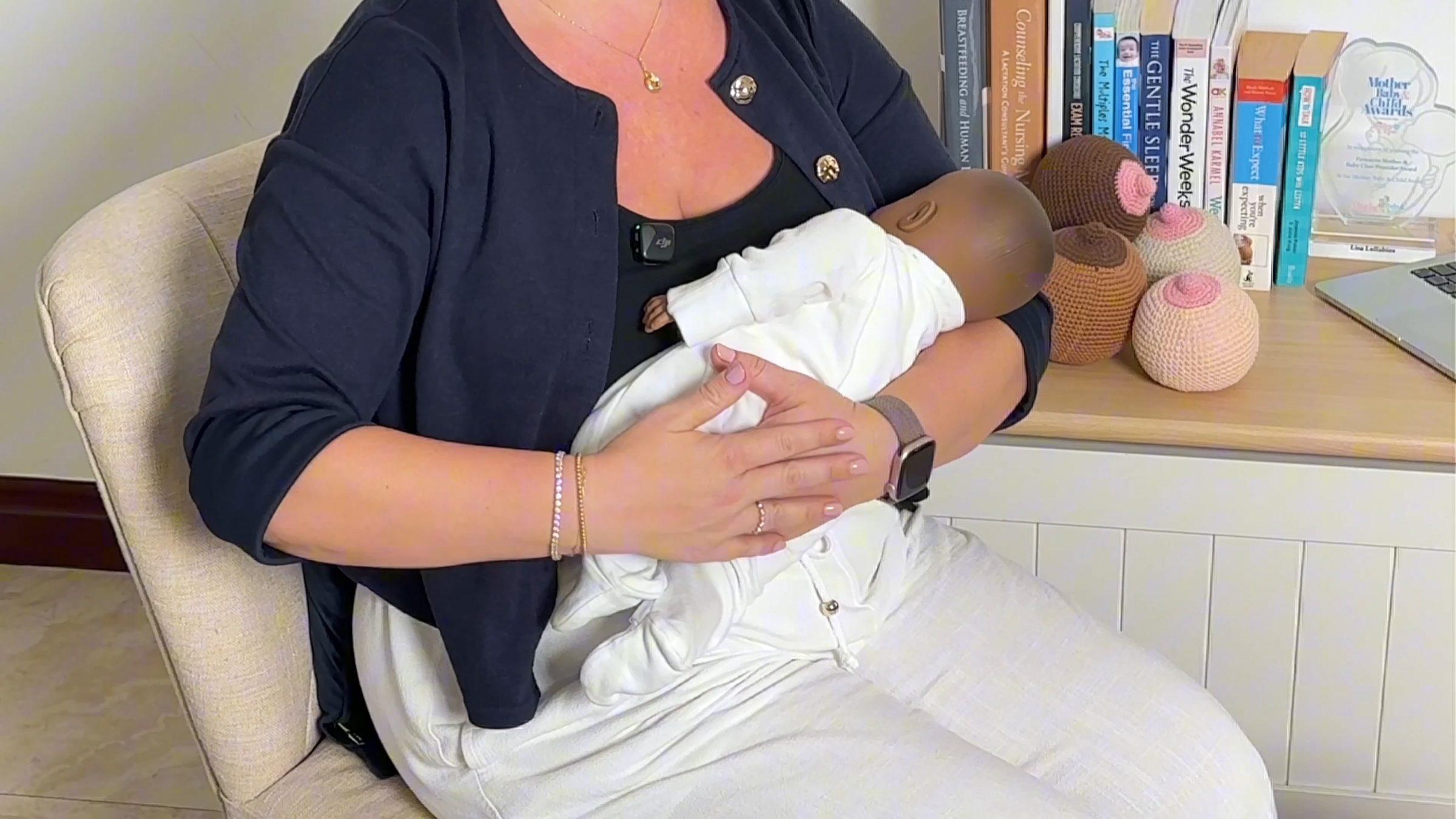
Everything you need to know once your baby is born, on video.
Feeding, sleep, bathing, safety and your own mental health, from the golden hour in hospital to your baby's first five months. Fifty-three short lessons from Lisa Adair, IBCLC lactation consultant and registered NICU nurse. Watch at home, in any order, and come back to them when you need them.
It covers everything after the birth. It doesn’t cover labour or the birth itself.
“The antenatal classes were incredibly informative, practical, and reassuring.”
Jessica, Google review of Lisa’s in-person antenatal classes
Breast, bottle or both
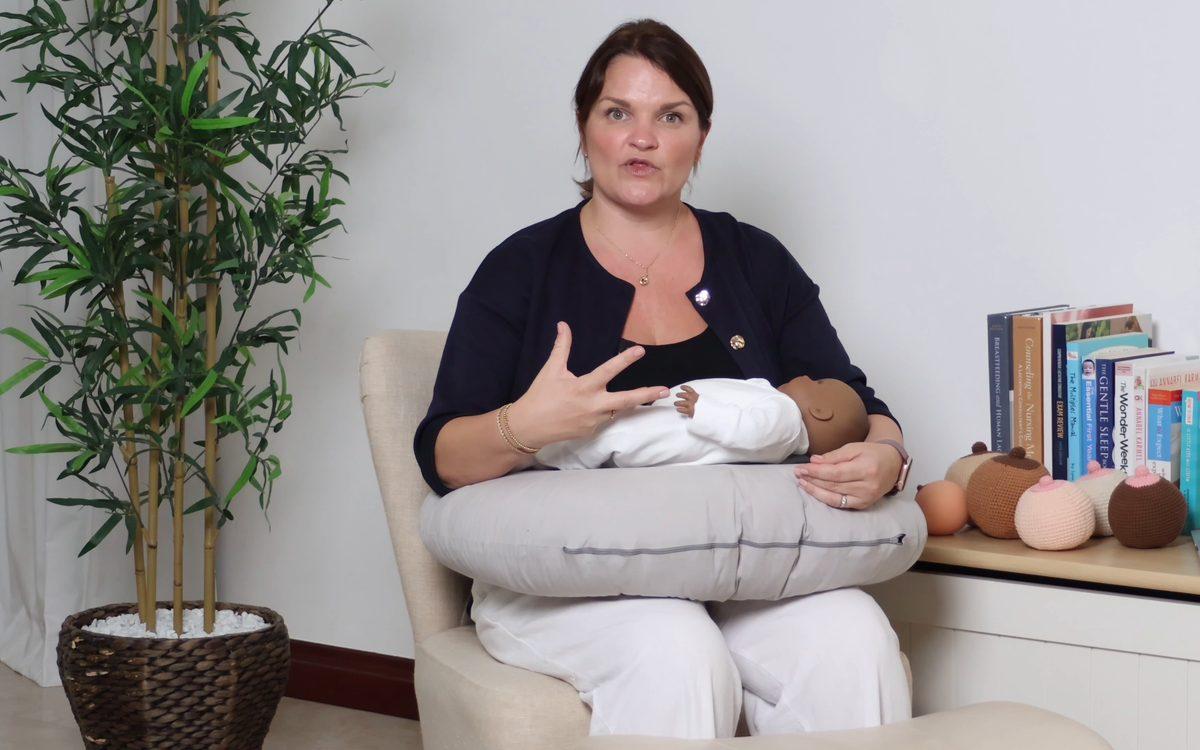
Breastfeeding from the first latch, colostrum harvesting in late pregnancy, expressing, storing milk and choosing a pump, and making up a bottle of formula safely by hand.
Safe sleep, and what's normal

Where your baby sleeps, bed sharing guidance from the Lullaby Trust, swaddles and sleeping bags, room temperature, and why newborns wake so often.
Bathing, dressing and car seats
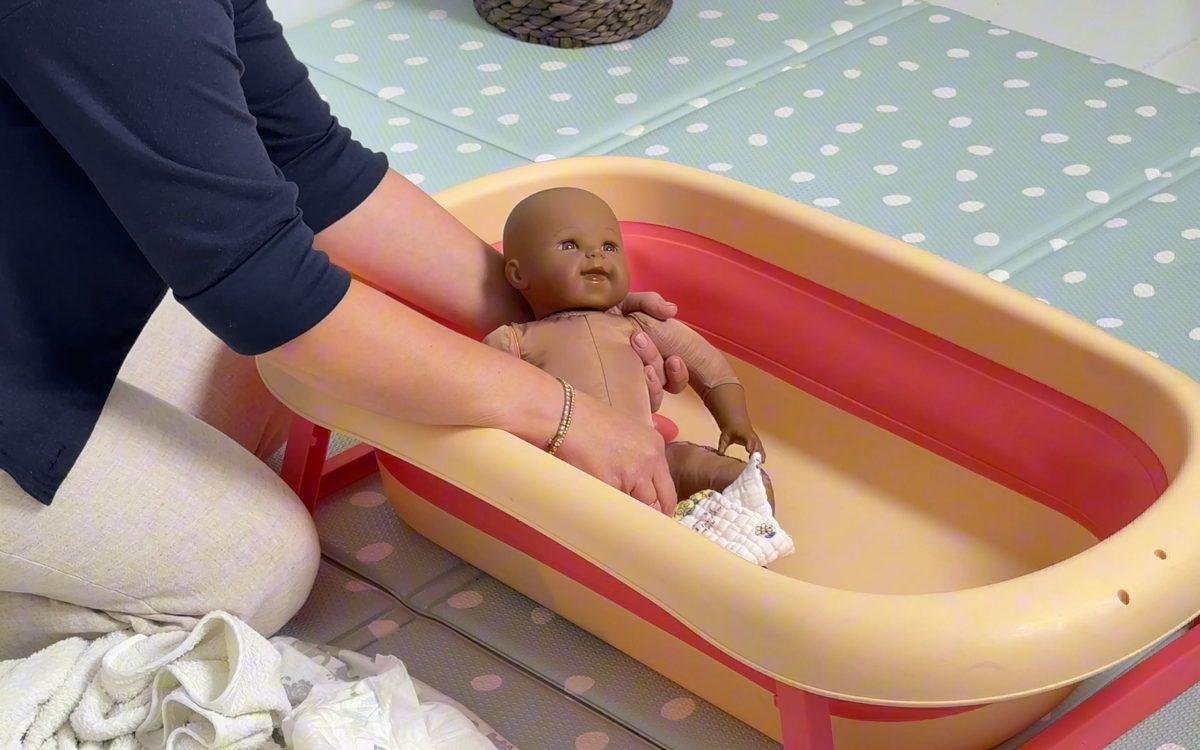
Nappy changes, the first baths and getting a newborn dressed, shown step by step on a demonstration doll. Then car seats, and checking the people you hire.
Most of your questions will come after the birth.

An antenatal class happens on a fixed evening, weeks before your baby arrives. The things it covers, like latching, safe sleep and bathing a newborn, don't become real until later, at home, often in the middle of the night.
In Dubai many families do this without parents or siblings nearby to ask. And guidance changes: if your last baby was a few years ago, some of what you learned then, like making up a day's formula in advance, is no longer advised.
This course is 53 short lessons, grouped by topic, that you can watch before the birth and go back to when you need them.
What the course covers, and what it doesn’t.
- The golden hour after birth, and the checks and vaccinations your baby is offered
- What happens if your baby needs the NICU or special care
- Breastfeeding, colostrum harvesting, expressing and storing milk
- Formula, choosing bottles and paced bottle feeding
- Safe sleep, bed sharing and normal newborn sleep
- Nappy changes, bathing and dressing
- Car seats and everyday safety
- The baby blues, postnatal depression and anxiety, and matrescence
- Labour, pain relief and birth choices. That is the midwifery side, and Lisa can point you to the right people for it.
- Your own health in pregnancy.
- Starting solids, which comes after the five months this course covers.
Fourteen modules, 53 short lessons.
3 h 30 min in all. Open a module to see its lessons.
01Welcome
Lisa introduces herself and the course. It starts where she would come in at a real birth, once your baby is born, so it applies however you give birth. You can watch the lessons in any order and come back to them when you need them.
- Welcome to the course5:07
02Birth and the hospital
The people you are likely to meet around your birth and what each of them does: doulas, midwives, obstetricians, anaesthetists and lactation consultants. The common thread is that you can always ask who someone is and what they are about to do.
- Doulas and midwives2:26
- Birth and hospital: your questions4:00
03The golden hour
The first hour after birth: why skin to skin matters for bonding and for starting breastfeeding, what to do if it doesn't happen, and which routine tasks can wait. Also covers the vaccinations and newborn checks your baby will be offered before you go home.
- What is the golden hour?5:06
- If you don't get the golden hour2:13
- Protecting the golden hour0:54
- Newborn immunisations3:48
- Newborn checks and tests4:07
- Golden hour: your questions6:09
04NICU and special care
Why some babies go to the neonatal unit or special care, from suspected infection to low birth weight and blood sugar problems. Lisa, a NICU nurse, explains what to ask, how to stay involved in your baby's care, and what a transitional care unit is.
- Infections, small babies and NICU4:14
- NICU and special care: your questions4:14
05Breastfeeding: getting ready
What to know before your baby arrives: the benefits of breastfeeding for you and your baby, colostrum harvesting in late pregnancy and whether it is right for you, and which equipment is worth having at home and which can wait.
- Why breastfeeding matters6:42
- Colostrum harvesting: is it for you?3:18
- Colostrum harvesting: what you need3:46
- Colostrum harvesting: collecting it4:13
- What you need to breastfeed5:57
- Nipple care, nipple shields and breast pads2:52
- Milk collectors and manual pumps3:43
06Breastfeeding your baby
The practical skills for the early weeks: getting a deep latch, finding a position that works for you, reading your baby's hunger signs, and knowing your baby is getting enough milk. Ends with the questions parents ask Lisa most often.
- Your baby's latch4:20
- Breastfeeding positions5:26
- Hunger signs1:22
- Is my baby getting enough milk?7:13
- Breastfeeding: your questions10:05
07Expressing and storing milk
Storing expressed milk safely, feeding it without a bottle using a flow feeder, using a silicone milk collector, and choosing and setting up a breast pump that fits you.
- Storing milk and using a flow feeder2:57
- Using a silicone milk collector1:32
- Choosing a breast pump4:53
- Pump settings1:07
08Formula and bottle feeding
For formula feeding and for combining breast and bottle: choosing formula and bottles, paced bottle feeding, making up a feed by hand, and cleaning and sterilising bottles without a machine.
- Formula and choosing bottles2:25
- Paced bottle feeding1:59
- Making up a bottle of formula4:33
- Cleaning and sterilising bottles2:44
09Safe sleep
Where and how your baby sleeps safely: bed sharing guidance from the Lullaby Trust, choosing a crib or Moses basket, why nests and positioners are not safe for sleep, room temperature, sleepwear, blankets and swaddling.
- Co-sleeping and bed sharing2:22
- Making bed sharing as safe as possible3:27
- Cribs and Moses baskets2:21
- Why nests and positioners aren't safe for sleep0:59
- Head shape and side preference2:49
- Room temperature, sleepwear and swaddles5:52
- Using a blanket safely1:27
- Swaddling with a muslin2:16
10Newborn sleep
What normal newborn sleep looks like, the signs your baby is tired, why many babies only want to sleep on you in the first months, and answers to the sleep questions parents ask most.
- What is normal newborn sleep?1:37
- Tired signs and the fourth trimester2:30
- Sleep: your questions7:00
11Caring for your baby
Nappy changes, bathing and dressing, demonstrated step by step: water temperature, umbilical cord care, holding a wet baby securely, and getting vests and sleepsuits on without a struggle.
- Getting ready for a bath and nappy change5:14
- Bathing your baby8:43
- Dressing your baby3:34
12Keeping your baby safe
Safety at home and in the car: never leaving your baby unattended on a raised surface, carrying your baby in a sling, choosing and fitting a car seat, and checking the qualifications of the people you hire.
- Everyday safety and carrying your baby4:21
- Car seat safety6:07
- Checking the people who care for your baby1:47
- Baby safety: your questions4:01
13Your mental health
The baby blues, postnatal depression and anxiety, and how they can show up in mothers and partners. Lisa explains matrescence, when to ask for help, and two things to agree with your partner before the birth.
- Your mental health after birth5:41
- Postnatal anxiety, depression and matrescence5:43
- Mental health: your questions7:05
14Thank you
Lisa's closing message and where to go for more help.
- Thank you, and where to go next1:45

Meet your teacher, Lisa Adair.
I'm Lisa Adair. I'm an IBCLC lactation consultant and a registered NICU nurse, registered in Dubai and the UK. Over the years I've sat with hundreds of parents, teaching them breastfeeding, sleep and everything in between.
This course starts where I come in at a real birth: once your baby is here. So it's for any birth, whether that's a planned caesarean, a vaginal birth or a water birth, and for first babies and second ones.
Parents in my classes told me that something they could watch again after the course, once the baby was here, would have helped. So I filmed it.
What parents say about Lisa’s antenatal classes.
“I did the antenatal class with Lisa before my baby was born and found it incredibly informative. It really helped us prepare for the birth and for those first few weeks at home.”
“The antenatal classes were incredibly informative, practical, and reassuring.”
“Lisa is a fountain of knowledge and the woman that every new mom needs in their corner.”
Antenatal Course (The Baby Bit)
53 video lessons, 3 h 30 min, in 14 modules. Watch at home, in any order.
Your questions, answered.
Not here? WhatsApp Lisa and ask.
Prefer to learn in person?
The Dubai Antenatal Course is four two-hour sessions in a small group, co-taught by Lisa and Nikki Oliver, a midwife. It covers pregnancy and the birth as well as the weeks after, and you meet other parents due around the same time. This video course is included when you book it. It costs AED 995.
See the dates for the Dubai Antenatal Course →Watch it before the birth. Come back to it after.
Fifty-three lessons, 3 h 30 min. AED 349, one payment, lifetime access.